

Drainage Compliance
Drainage Compliance
Compliance Approach
The Water Security Agency facilitates responsible drainage by helping landowners, communities and industry understand the rules, make good choices, and when needed, address problems. The approach balances three pillars: education, prevention and enforcement. These are guided by strong planning and monitoring.
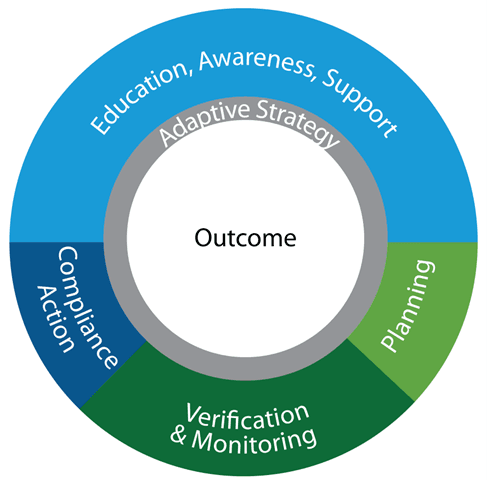
Education, Awareness and Support: Clear Information, Practical Support
Compliance starts with understanding. WSA shares easy‑to‑use information and connects people with the right resources so they can practice responsible drainage.
How WSA helps:
- Demonstrations and field days
- Partnerships with producer groups and local organizations
- Helpful guides, printed materials, and online resources
- Updates through social media and news releases
What this achieves:
- Everyone including producers, municipalities, and citizens knows what’s required or where to get the information they need
- Producers lead the shift toward responsible drainage practices
Planning, Verification and Monitoring
WSA plans and keeps an eye on results. Using risk‑based monitoring and evaluation, the efforts are focused where they matter most. This supports a fair, transparent, and effective approach, so the right support reaches the right places at the right time.
The goal is to make doing the right thing an easy and practical choice with processes that are designed to be timely and clear, with support along the way.
How WSA helps:
- Clear approval conditions that set expectations up front
- Audits that offer feedback and assurance
- Modern monitoring tools (including satellite imagery) to spot issues early
- Meeting client needs through quality service and trusted Qualified Persons (QPs)
What this achieves:
- Straightforward approvals and quality service
- Reliable access to technical and QP support
- More people choosing voluntary compliance
Enforcement: Fair and Focused When It’s Needed
After education and support, if requirements remain unmet, WSA uses a measured, risk based response to protect people, property and the environment.
Tools WSA may use:
- Requests for Assistance and Investigations
- Orders and Forced Closure
- Prosecution, Administrative Penalties and Civil Actions
WSA’s goal:
Address priority noncompliance efficiently and fairly, focusing on the greatest risks.
Request for Assistance
The Water Security Agency (WSA) understands the impacts agricultural drainage may have on downstream landowners and the environment. In some cases, landowners may be affected by upstream drainage projects that did not receive the proper WSA approvals.
To ensure drainage works are operated responsibly, WSA is committed to effectively handling agricultural drainage concerns through the Request for Assistance (RFA) submission process.
Under the RFA process, a person experiencing a drainage issue (a Petitioner) makes a request for assistance to WSA. WSA first determines if the drainage works concerned exist, whether the drainage works have an approval and if they are being operated within the conditions in the approval.
This ensures:
- Impacted parties are heard and responded to;
- The landowner of the concerned drainage works (the Respondent) is informed of the options to bring their drainage into compliance with legislation, which can include getting their drainage works approved or closing their works; and, that drainage works are brought into compliance in a timely manner.
A Collaborative Team
We know that water management can be complicated, so we’re here to help! The WSA team is available to answer questions, find information, and help you accurately prepare permit applications to make the review and approval process smoother. Use the contact form or give us a call to get started.